
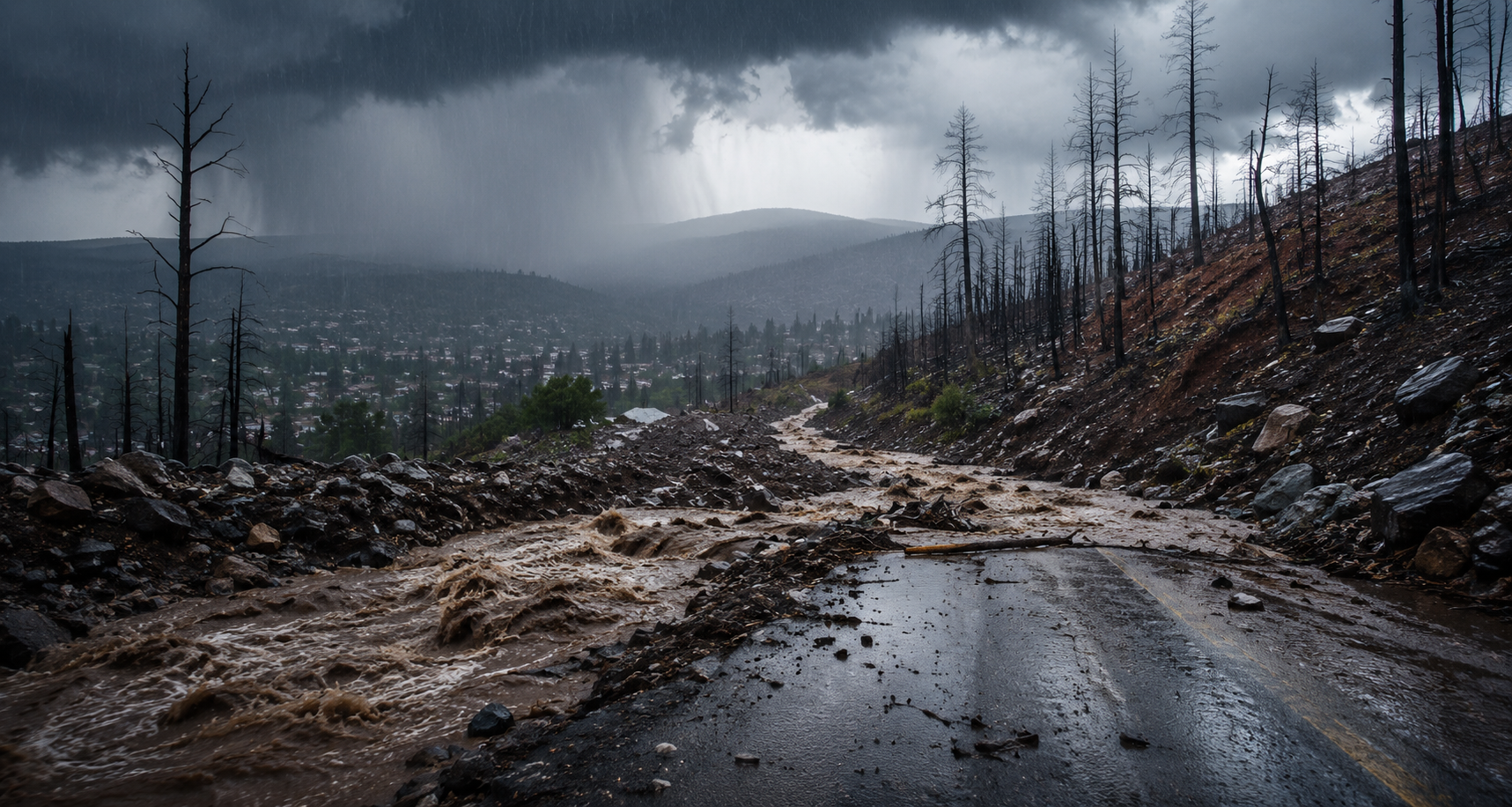
Burn Scar Flooding
Wildfire changes how the land absorbs water. Even small storms can trigger dangerous flash flooding, mudflows, and debris flows with little warning.
Burn scar flooding can happen suddenly and become life-threatening within minutes. Know your risk, understand evacuation warnings, and prepare before heavy rain arrives.

Burn scar flooding can happen fast.
After wildfire, the land cannot absorb rainfall the way it once did. Even a short, intense storm can send water, ash, rocks, mud, and debris downhill quickly.
Flooding is the most common natural disaster in the United States. In burn scar areas, flash flooding may occur with little warning, especially in arroyos, low-lying areas, drainage channels, roadways, and areas below steep slopes.
Before heavy rain arrives
Know your risk, sign up for emergency alerts, monitor weather conditions, and be ready to move quickly if officials issue evacuation instructions.
Know what flood alerts mean.
Flood alerts communicate different levels of danger. Understanding the difference can help you act quickly when conditions change.
Be Prepared
A Flood Watch means conditions are favorable for flash flooding.
- Monitor weather updates.
- Stay alert to changing conditions.
- Be prepared to act quickly.
Take Action
A Flash Flood Warning means flash flooding is occurring or expected soon.
- Move to higher ground.
- Avoid flooded roads.
- Follow instructions from officials.
Action NOW
A Flash Flood Emergency is the highest level of flash flood alert.
- Life-threatening flooding is occurring or imminent.
- Move to the safest available high ground.
- Do not travel unless instructed by officials.
Do you live in a floodplain?
Burn scar flooding can affect areas beyond traditional waterways. Understanding your property’s flood risk is an important part of preparing before heavy rainfall arrives.
Properties in Special Flood Hazard Areas may require additional review before construction, development, repairs, or placement of manufactured homes.
Approval by the local Floodplain Administrator is required before construction or development begins within any Special Flood Hazard Area. This helps ensure proposed projects meet National Flood Insurance Program requirements and the Village’s floodplain management ordinance.
Questions about permitting or regulations?
Contact Village of Ruidoso Community Development for guidance before beginning work in flood-prone areas.
Phone: 575-258-6999
What to do during a flood warning.
When flooding is possible or already happening, every minute matters. Follow official instructions and avoid flooded areas.
Evacuate immediately if told to leave.
Do not wait to see rising water. Follow evacuation instructions from local officials.
Never drive around barricades.
Local responders use barricades to safely direct traffic away from flooded or dangerous areas.
Turn Around. Don’t Drown.
Do not walk, swim, or drive through flood waters. Water may be deeper, faster, or more dangerous than it appears.
Stay off bridges over fast-moving water.
Fast-moving water can damage or wash out bridges without warning.
If trapped, move higher.
If trapped in a building, move to the highest safe level. Do not climb into a closed attic. If trapped in a vehicle in rapidly moving water, stay inside unless water is rising inside the vehicle, then get on the roof and signal for help.
Call 9-1-1 for medical emergencies.
If you are sick and need medical attention, contact your healthcare provider for instructions. For a medical emergency, call 9-1-1.
Use sandbags correctly.
Sandbags can help reduce low-flow flood damage, but they do not completely seal out water and are not a substitute for evacuation when officials tell you to leave.
Fill
Fill sandbags about one-third to one-half full so they can lay flat, mold to the ground, and fit tightly against each other.
Stack
Place bags lengthwise and overlap them like bricks. Compact each bag so it fits snugly against the next bag.
Place
Use sandbags near doorways, garage doors, vents, and other low entry points. Make sure placement does not block your ability to leave in an emergency.
Watch: Sandbag Installation Demonstration
This short instructional video demonstrates practical sandbag placement and flood protection techniques.
Flood SAFE Partner Program
Businesses, nonprofits, faith organizations, and community groups can help strengthen flood preparedness through the Village of Ruidoso Office of Emergency Management’s Flood SAFE Partner Program. Participating organizations receive training and official resources to help share reliable information before and during flood events.
Flood safety resources.
Use these resources to prepare your household, understand flood risks, and learn more about flash flood safety.
Prepare before the next storm.
Burn scar flooding can happen quickly. Make a plan, build a go bag, sign up for alerts, and know where you will go if officials tell you to evacuate.