Sandbags
How to Fill, Place, and Use Them Effectively
Sandbags can help reduce floodwater intrusion and redirect shallow flows away from homes, garages, and other structures. While sandbags cannot stop all flooding, proper placement can help minimize damage during heavy rainfall, flash flooding, and post-wildfire flooding events.

Watch this short video to learn how to safely fill, place, and use sandbags before heavy rain or flooding occurs.
Sandbag Distribution Information
Free sandbags are available to Village of Ruidoso residents to help prepare for potential flooding and storm impacts.
Sandbag Pickup Locations
Ruidoso Convention Center
111 Sierra Blanca Drive, Ruidoso
Wingfield Park
311 Center Street, Ruidoso
Hours of Operation
Monday–Friday
7:00 AM–7:00 PM
Sandbag Guidelines
Residents are responsible for filling their own sandbags.
Sand is provided through a partnership between the State of New Mexico, DHSEM, and NMDOT.
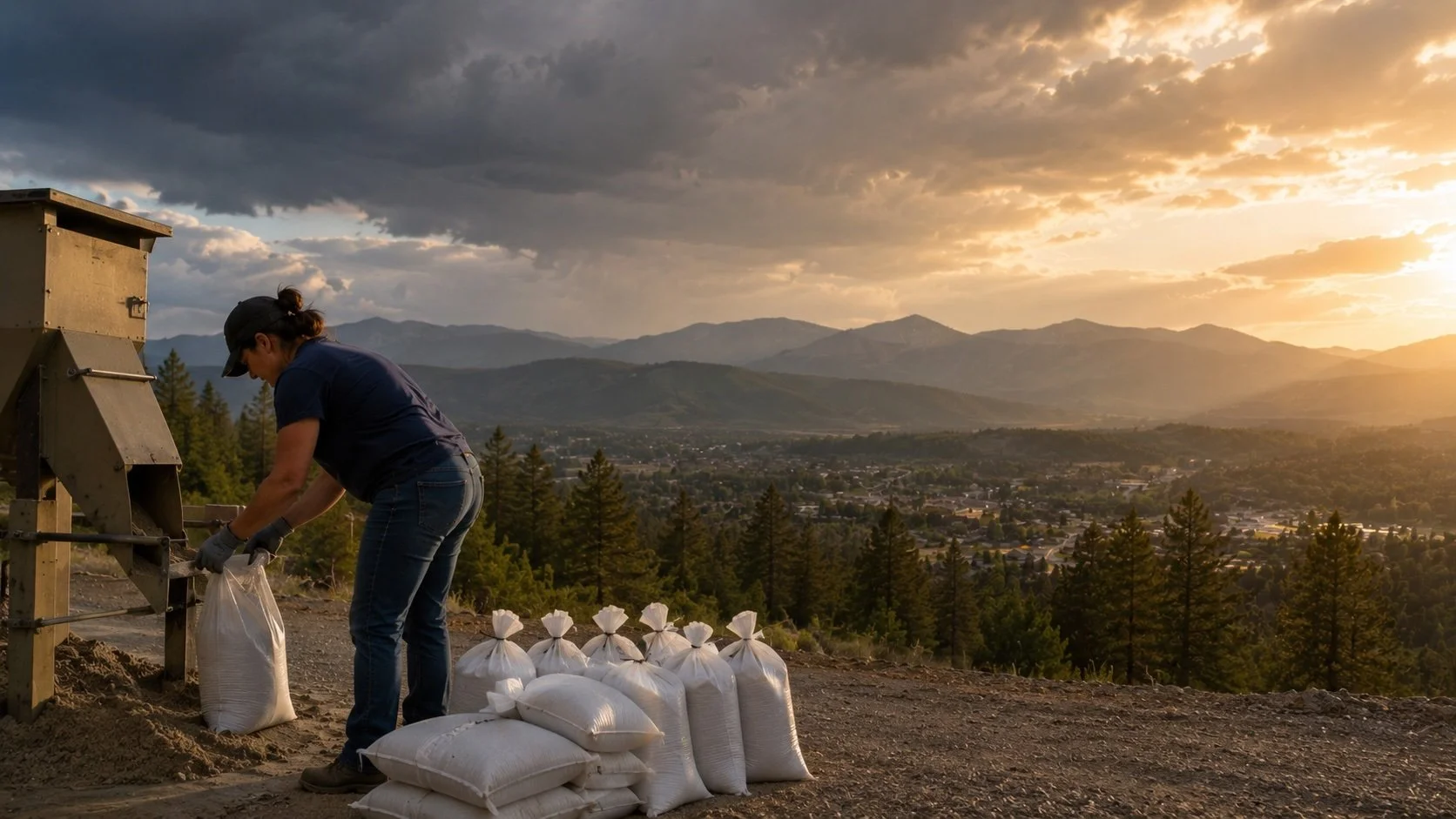
A SandBagger machine is available at each distribution site to assist with filling.
Residents who need assistance may be eligible for support through Community Organizations Active in Disaster (COAD) on a case-by-case basis.
Maximum limit of 30 sandbags per household.
Please fill sandbags approximately half full.
Available while supplies last.
Sandbag Basics
When Sandbags Help
Sandbags can help reduce flood damage when used correctly and placed before flooding begins. They work best when combined with other preparedness measures and used to redirect shallow water away from structures.
Properties located below burn scar areas may experience flooding from relatively small rainfall events. Sandbags should be considered one part of a broader flood preparedness plan that includes emergency alerts, evacuation planning, and situational awareness.
Sandbags Can
- Redirect shallow runoff away from buildings
- Help reduce water intrusion through doors and low openings
- Slow water moving across driveways and yards
- Provide temporary protection during heavy rainfall
- Help protect vulnerable areas before storms arrive
Sandbags Cannot
- Stop fast-moving floodwaters
- Prevent damage from debris flows or mudslides
- Protect against deep flooding
- Guarantee that a structure will remain dry
- Replace evacuation orders or flood warnings
How To
How to Fill and Place Sandbags
Properly filled and placed sandbags can help reduce flood damage by slowing and redirecting shallow water. Follow these guidelines before heavy rain or flooding begins.
Fill Partway
Fill sandbags approximately one-third to one-half full. This allows the bags to mold to the ground and create a tighter seal.
Do Not Overfill
Overfilled bags are difficult to stack and often leave gaps where water can pass through.
Tuck the End Under
Fold or tuck the open end underneath the bag after placement to help keep it closed.
Keep Bags Flexible
Leave enough room for the sand to shift within the bag so it can conform to uneven surfaces.
Proper Sandbag Placement
Place bags lengthwise and parallel to the direction of water flow. Stagger each row like brickwork and flatten bags into place to improve sealing.
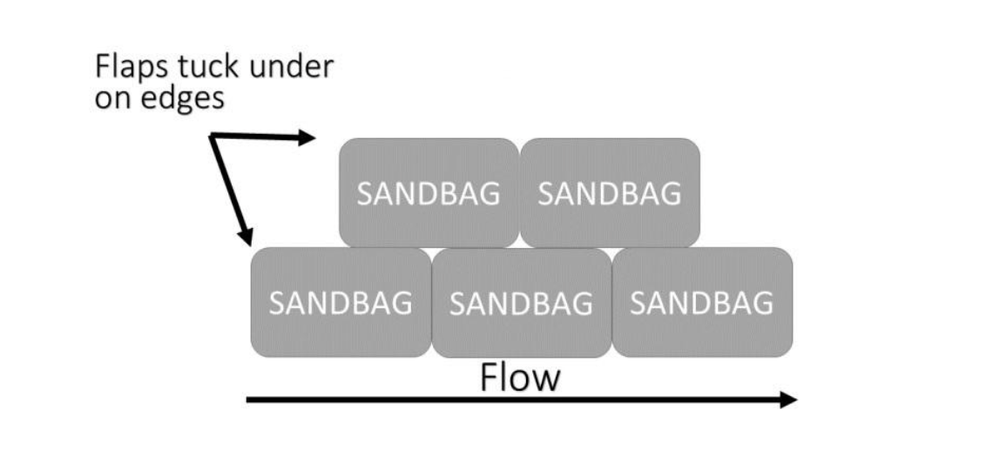
- Clear debris before placement.
- Place bags parallel to water flow.
- Tuck loose ends underneath.
- Stagger joints like brickwork.
- Flatten bags into place.
- Build low and wide rather than tall and narrow.
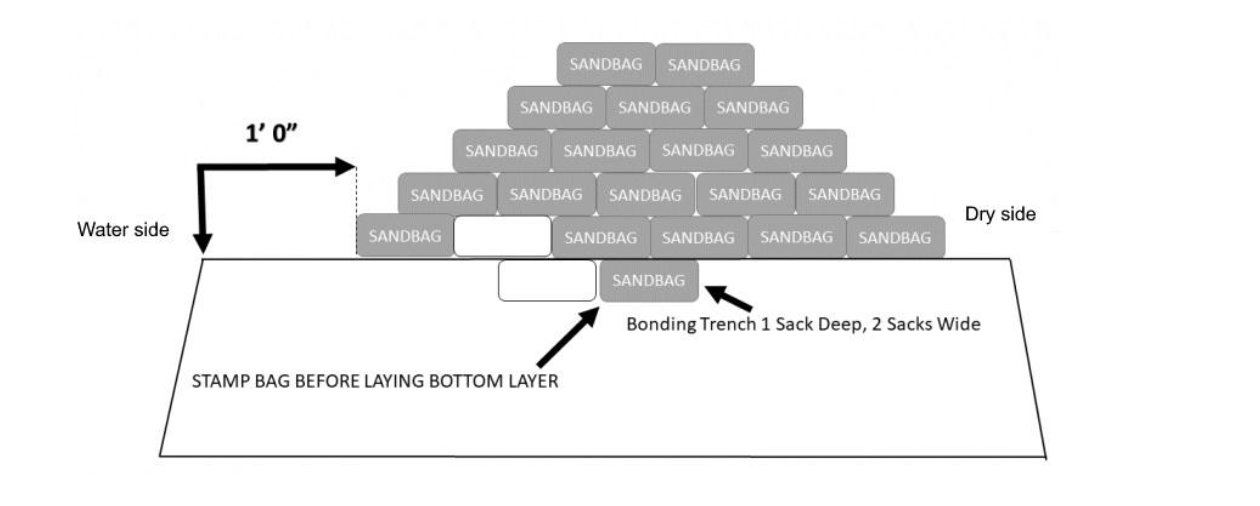
Building a Higher Barrier
When additional protection is needed, sandbags may be stacked in a pyramid formation. A wide base and staggered rows create a stronger barrier than a vertical wall.