
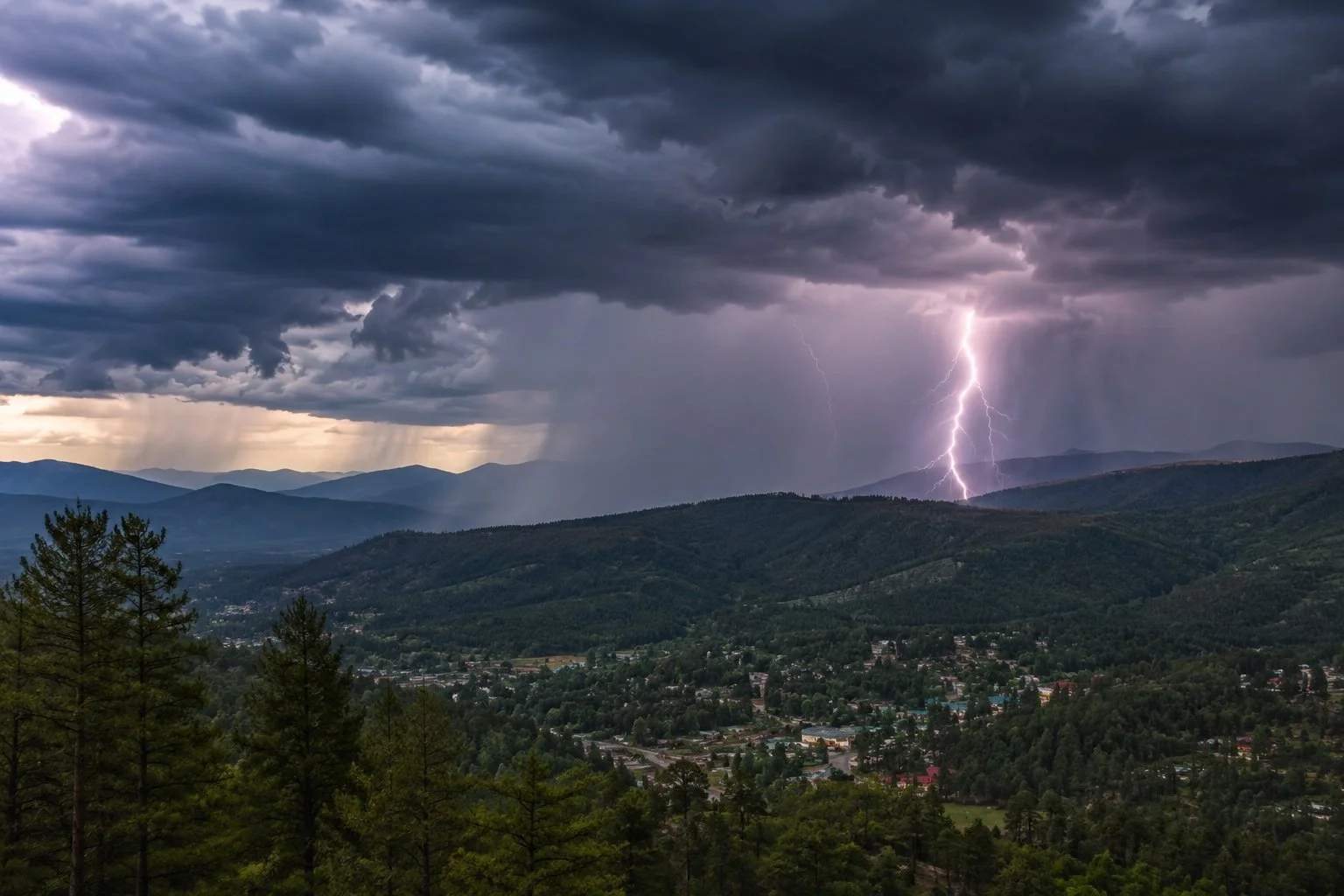
Severe Thunderstorms
Fast-moving mountain storms can bring lightning, hail, damaging wind, flash flooding, and sudden power outages.
Severe thunderstorms are common in Ruidoso from spring through monsoon season. Conditions can change quickly in the mountains. Learn how to prepare your household, stay informed, and respond safely during severe weather.

Know the Difference Between a Watch and a Warning
Severe thunderstorms can develop quickly in the mountains. Understanding official alerts helps you know when to prepare, when to take shelter, and how to keep your household safe.
Severe Thunderstorm Watch
A watch means severe thunderstorms are possible in or near the area. Conditions are favorable for storms that may produce damaging wind, large hail, lightning, or heavy rain.
Stay informed, review your emergency plan, charge devices, and be ready to move indoors if a warning is issued.
Severe Thunderstorm Warning
A warning means severe weather has been detected by radar or reported by trained spotters. Dangerous conditions are occurring or about to occur.
Move indoors immediately, stay away from windows, avoid travel if possible, and continue monitoring official alerts.
Severe Thunderstorms Can Create Multiple Hazards
A severe thunderstorm is defined by the National Weather Service as a storm capable of producing winds of 58 mph or stronger and/or hail 1 inch in diameter or larger. In Ruidoso, thunderstorms may also bring dangerous lightning, flash flooding, falling trees, road hazards, and power outages.
Some severe thunderstorms can also produce tornadoes with little warning. Always take official alerts seriously.
Before a Severe Thunderstorm
Preparation helps reduce risk before storms develop. Take steps now so your household knows what to do when severe weather threatens.
Sign Up for Emergency Alerts
Official alerts are the fastest way to receive emergency information about severe weather, flooding, evacuation notices, road closures, and other hazards.
Know Where to Shelter
Choose an interior room on the lowest floor possible, away from windows, skylights, and glass doors.
- Avoid garages and large open rooms.
- Keep pets with you if time allows.
- Make sure every household member knows where to go.
Prepare for Power Outages
Severe storms can damage power lines and interrupt service. Keep essential supplies ready before storms arrive.
- Flashlights and extra batteries
- Portable phone chargers
- Prescription medications
- Pet supplies
- Battery-powered NOAA Weather Radio
Secure Outdoor Items
Strong winds can turn unsecured objects into hazards. Bring lightweight items indoors or secure them before storms arrive.
- Patio furniture
- Umbrellas
- Trash bins
- Tools and yard equipment
Build a Go Bag
Keep essential supplies ready in case severe weather leads to road closures, power outages, flooding, or evacuation needs.
Create a Household Plan
Make sure everyone knows how to communicate, where to shelter, and what to do if separated during an emergency.
Heavy Rain Can Trigger Flash Flooding
Thunderstorms can produce intense rainfall in a short period of time. In and below burn scar areas, heavy rain may quickly create flash flooding, debris flows, and dangerous roadway conditions.
Never drive through flooded roads, low-water crossings, or arroyos. Turn around, don’t drown.
During a Severe Thunderstorm
When a Severe Thunderstorm Warning is issued, take action immediately. Do not wait until conditions become dangerous where you are.
Move to Your Safe Place
Go to an interior room away from windows. Stay there until the warning has expired and the storm has passed.
Get Inside Immediately
Do not shelter under trees, in sheds, under porches, or near fences. If no building is available, move to a hard-topped vehicle.
Avoid Travel if Possible
Heavy rain, hail, low visibility, falling branches, and flooded roads can make travel dangerous. Pull into a safe location when conditions deteriorate.
Stay Away From Lightning Hazards
Lightning can strike miles away from a storm. Avoid open areas, water, trees, metal fencing, and corded electrical devices during lightning activity.
After a Severe Thunderstorm
Storm hazards may remain after the thunder and lightning stop. Use caution before going outside or traveling.
Stay Informed
Continue monitoring official alerts and local weather information. Additional storms or flash flooding may still be possible.
Avoid Hazards
Stay away from downed power lines, damaged trees, flooded areas, and unstable structures. Report emergencies to local authorities.
Check on Neighbors
If it is safe to do so, check on older adults, people with access or mobility needs, and neighbors who may need help after the storm.
Document Damage
Take photos before cleanup, contact your insurance provider, and be cautious of repair scams after severe weather events.
Clean Up Safely
Wear sturdy shoes, gloves, long pants, and long sleeves when clearing debris. Do not enter damaged buildings until they are determined to be safe.
Prepare for the Next Round
Recharge devices, restock supplies, and review your plan. Severe weather systems can bring repeated storms to the area.
Related Preparedness Resources
Severe thunderstorms often overlap with other emergency risks. Use these resources to strengthen your household preparedness.