
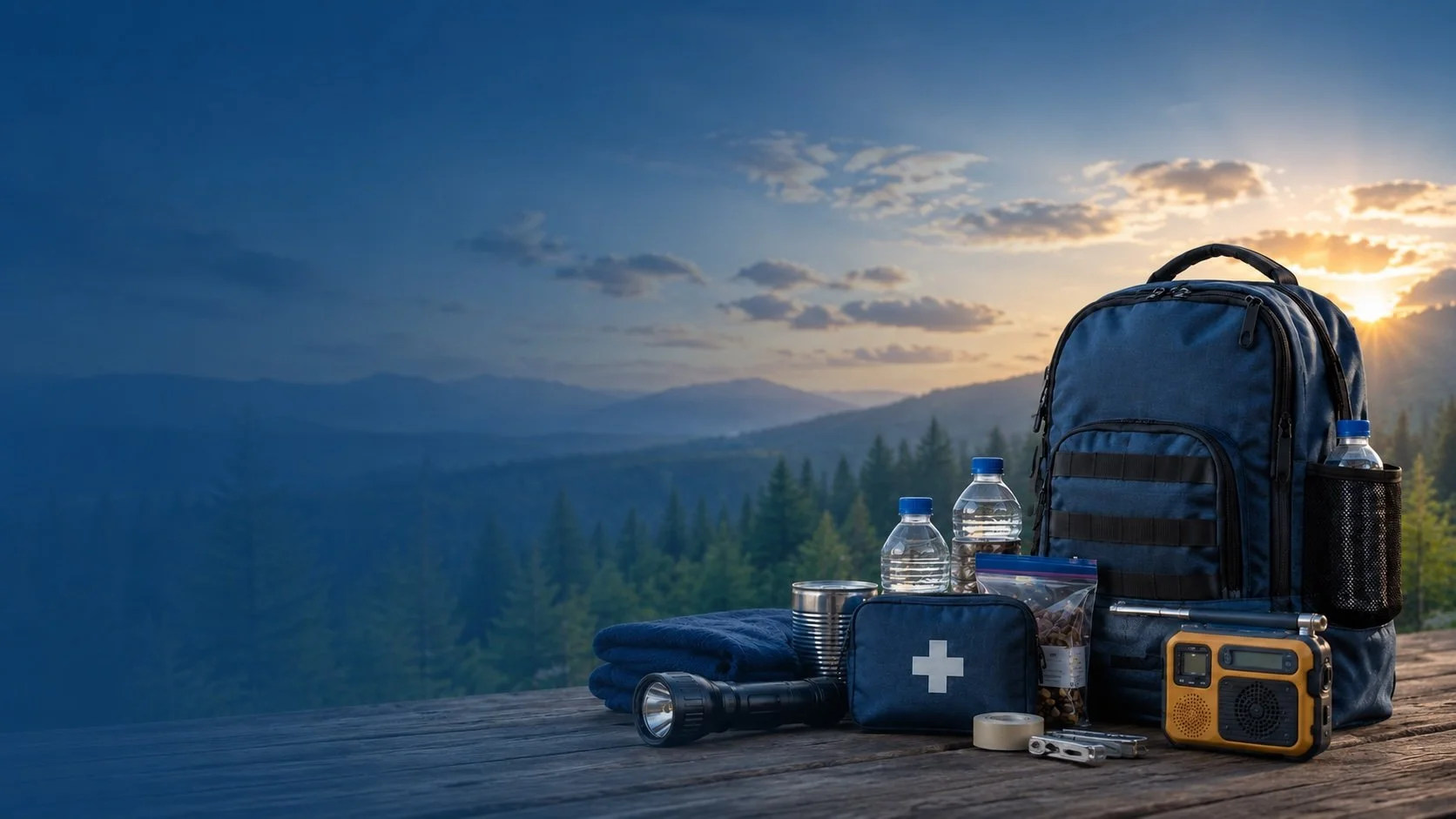
Build A Go Bag
Pack It Now. You May Have Minutes to Leave.
A go bag is a pre-packed emergency bag with enough supplies to help you and your household stay safe for at least 72 hours away from home during an evacuation.
When an evacuation order comes, you should be able to grab your bag and leave in under five minutes.
Do not wait until smoke is visible or flames are nearby. By then, it is too late to pack carefully.

The Five-Minute Rule
If an evacuation order is issued, your household should be ready to leave in less than five minutes. Your go bag should already be packed, accessible, and easy to grab.
The Essentials
Every household member should have their own bag, sized and packed for their needs. Use this checklist as your starting point.
Water & Food
- Water — 1 gallon per person per day, 3-day minimum
- Non-perishable food, 3-day supply
- Manual can opener
- Water purification tablets or filter
- Baby food or formula, if applicable
- Pet food, if applicable
Documents & Identification
Keep copies of critical documents in a waterproof or sealed plastic bag.
- Government-issued ID
- Social Security cards
- Birth certificates
- Insurance policies
- Property deed or lease agreement
- Vehicle titles
- Medical and vaccination records
- List of medications and dosages
- Emergency contacts
- Recent photos of household members
- Recent photos of your property
- Bank and financial account information
First Aid & Medications
- First aid kit
- Prescription medications — 7-day supply minimum
- Extra eyeglasses or contact supplies
- Hearing aids and extra batteries
- Infant or child medical needs
- N95 masks for smoke and ash
Clothing & Shelter
- Change of clothing for each household member
- Warm layers or a blanket
- Sturdy closed-toe shoes
- Rain gear or emergency poncho
- Emergency mylar blankets
- Sleeping bag, if space allows
Communication & Power
- Charged portable battery pack
- Phone charger and car charger
- Battery-powered or hand-crank weather radio
- Flashlight and extra batteries
- Headlamp
- Whistle
Cash & Cards
- Cash in small bills — ATMs may be offline
- Credit or debit card
- Copy of important account numbers
Build for Your Situation
Your go bag should reflect the real needs of the people, pets, and medical circumstances in your household.
Infants & Young Children
Pack diapers, wipes, formula, comfort items, and car seat documentation.
Pets
Include food, water, leash, carrier, vaccination records, and medications.
Seniors & Mobility Needs
Plan for mobility aids, medical equipment power needs, and extra medications.
Medical Conditions
Include oxygen, insulin storage, dialysis supplies, or other specialty medical needs.
Where to Keep Your Go Bag
Your go bag should be easy to reach and ready to move. Do not bury it in a closet, attic, or storage area.
At Home
Store it near an exit. A garage, hallway, mudroom, or entry area works well.
In Your Vehicle
Keep a lighter version in your car in case you cannot return home before evacuating.
At Work
A basic workplace kit can help if an emergency happens while you are away from home.
Refresh Your Bag Every Six Months
A go bag that has not been checked in a year may contain expired food, dead batteries, or medications you no longer take.
Review and refresh your go bag twice each year. A good reminder is when you change your smoke alarm batteries.
Download a Checklist
Use the New Mexico Department of Homeland Security and Emergency Management checklist as a printable reference while building your household go bag.
Preparedness Works Best Together
Building a go bag is one part of being ready. Make sure your household also knows its evacuation zone, has a communication plan, and receives official emergency alerts.